JillLebofsky may earn a commission if you buy through links on this page, at no extra cost to you. That does not change what we report.
Part of our VertiAid overview. Last checked November 6, 2026.
VertiAid side effects are unknown for the product itself, because no study of the chewable has been published; the risks we can name come from its ingredients. The largest is American ginseng: in a randomized trial of 20 healthy volunteers, two weeks of it lowered warfarin's effect, with peak INR 0.19 lower than placebo[1].
The vitamins sit at 100% of the Daily Value or less, so overdose risk from one chewable a day is low[2].
Is VertiAid safe? Safety at a glance
VertiAid is likely low risk for most healthy adults at one chewable a day, with one firm exception: people on warfarin should not start it without their prescriber. American ginseng, one of the blend ingredients, reduced warfarin's anticoagulant effect in a controlled trial[1].
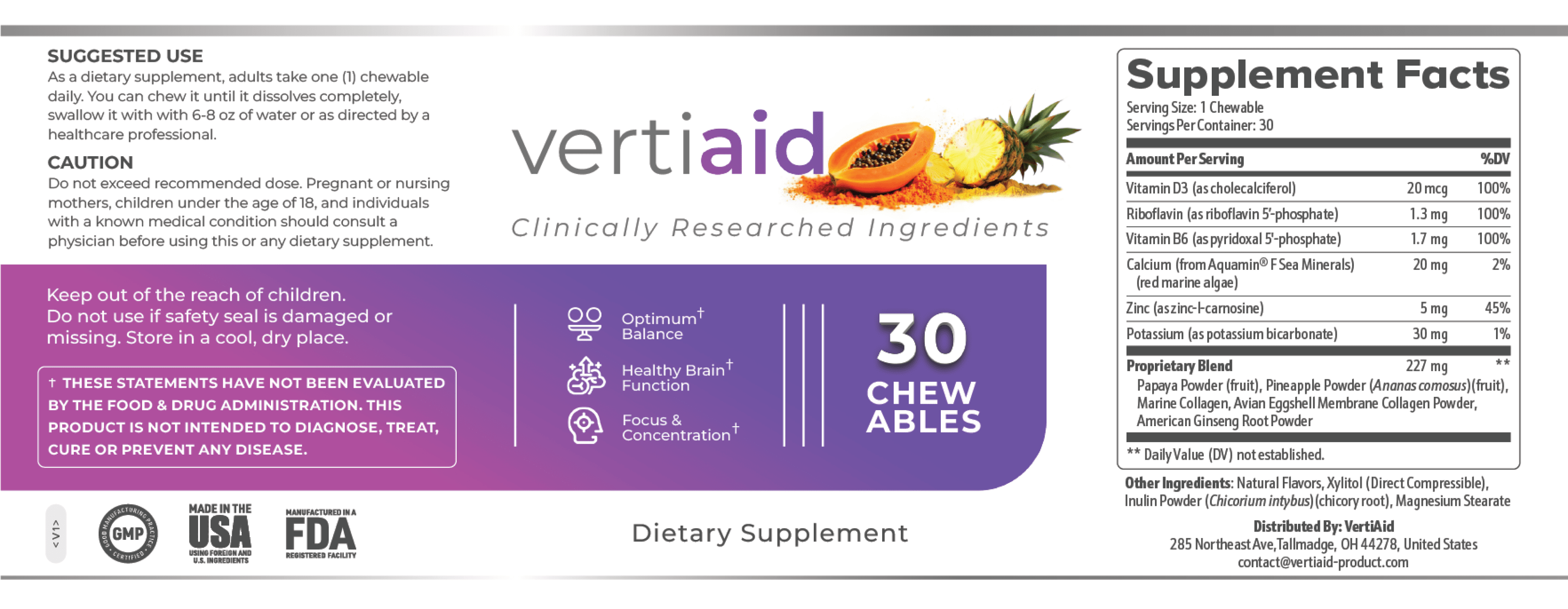
Three more points follow from the label[2]:
- The blend amounts are hidden, so you cannot judge the ginseng, collagen or papaya dose.
- Marine collagen, eggshell membrane, papaya and pineapple are allergy sources.
- The label says not for under 18, and pregnant or nursing women or anyone with a medical condition should ask a physician.
FDA recall records (openFDA food enforcement) showed no recall matching VertiAid on November 6, 2026. We did not check FDA warning letters or adverse event reports.
What side effects are possible?
Possible VertiAid side effects fall into three groups. None has been reported for the product in a study; each comes from an ingredient's own record.
Digestive
Inulin from chicory root, a fiber in the tablet, can cause gas and bloating at higher intakes, and people sensitive to FODMAPs may not tolerate it. The tablet also contains xylitol. Papaya and collagen trials reported no harms in the abstracts we read[3][4].
Sensitivity and allergy
Papain, the papaya enzyme, is a known allergen, with cross-reactions to kiwi and fig[5]. Most papain allergy cases came from breathing it in at work; papain-like proteins eaten in food rarely cause reactions[6]. Marine collagen is fish-derived and eggshell membrane is egg-derived.
Medication-related
American ginseng lowered blood sugar after a glucose drink by about 18 to 22%, and the authors advised people without diabetes to take it with a meal[7]. With diabetes medicines, that effect could add up. The warfarin effect is covered below.
Which ingredients deserve extra attention?
American ginseng deserves the most attention, followed by the allergy sources and xylitol. The table uses only the safety records we hold on each ingredient.
| Ingredient | Safety issue | Why it matters |
|---|---|---|
| American ginseng | Lowered warfarin's effect in a trial[1] | Less protection from clots for people on warfarin |
| American ginseng | Lowers blood sugar after meals[7] | Adds to diabetes medicines; watch glucose |
| Papaya powder | Papain allergy, kiwi and fig cross-reaction[5] | Avoid with papaya, kiwi, fig or latex-fruit allergy |
| Marine collagen | Fish source | Avoid with fish allergy |
| Eggshell membrane collagen | Egg source | Avoid with egg allergy |
| Xylitol (other ingredient) | Raised platelet reactivity in one study[8] | Caution with clotting risk or blood thinners; toxic to dogs |
| Vitamin B6 | Nerve damage at high intakes[9] | 1.7 mg is safe alone; count other B6 products |
Which medicines could interact?
Warfarin is the medicine with direct trial evidence of an interaction with a VertiAid ingredient. Take this list to a pharmacist along with your own medicine list:
- Warfarin: American ginseng lowered INR and warfarin blood levels in healthy volunteers[1]. Talk to your prescriber before starting.
- Other blood thinners and antiplatelet drugs: xylitol raised platelet reactivity in one study, not tested with these drugs directly[8].
- Diabetes medicines and insulin: possible extra glucose lowering from ginseng[7].
- Levothyroxine, bisphosphonates, tetracycline and quinolone antibiotics: calcium lowers their absorption; zinc also binds these antibiotics. Space doses apart[10].
- Thiazide diuretics: raise blood calcium, though 20 mg is a small amount[10].
Some medicines cause dizziness themselves, so a medicine check is worth doing before any supplement.
Pregnancy, breastfeeding and who should ask a doctor first
The VertiAid label asks three groups to consult a physician, and the ingredient records add more[2]:
- Pregnant or breastfeeding women (label)
- Anyone under 18 (label)
- Anyone with a known medical condition (label)
- People taking warfarin or another blood thinner
- People taking diabetes medicines or insulin
- Anyone allergic to fish, egg, papaya, papain, kiwi, fig or pineapple
- Anyone already taking a multivitamin, vitamin D or B6 product, to keep totals under the upper limits
Households with dogs should store the bottle out of reach, because xylitol is toxic to dogs.
Which symptoms need a doctor right away?
Stop VertiAid and get help if you notice any sign below. Dizziness can come from a stroke, so the first list is an emergency.
Call 911 right away for:
- Sudden vertigo with weakness or numbness on one side
- Slurred speech or face droop
- Double vision
- Swelling of the lips, tongue or throat, or trouble breathing
See a doctor soon for: unusual bruising or bleeding on a blood thinner, shaky or sweaty spells on diabetes medicine, hives, or dizziness that keeps returning. Our guide to the causes of vertigo explains why the cause matters.
Safety conclusion
For a healthy adult on no medicines, one VertiAid chewable a day carries low known risk; it also carries no proven benefit for dizziness, as our evidence check on whether VertiAid works explains. The real cautions are American ginseng with warfarin or diabetes medicines, and the fish, egg and papaya allergy sources in an undisclosed blend. Check the label on your bottle, read the VertiAid dosage directions, and ask a pharmacist if you take any prescription drug.
Back to the VertiAid overview.
Frequently asked questions
Can I take VertiAid with warfarin?
Not without your prescriber. VertiAid contains American ginseng, and in a randomized trial two weeks of American ginseng lowered warfarin blood levels and INR in healthy volunteers. That can mean less protection from clots, so INR checks may need to change.
Does VertiAid raise blood pressure?
Nothing on the VertiAid label is a stimulant, and no study of the product exists. In one 8-week trial, 3 g a day of American ginseng lowered systolic blood pressure slightly in people with diabetes, a far larger dose than the 227 mg blend.
Is VertiAid safe for diabetics?
Ask your doctor first. American ginseng, one blend ingredient, lowered blood sugar after a glucose drink in people with and without type 2 diabetes. Combined with diabetes medicines or insulin, that could add to their effect, though the VertiAid ginseng dose is not disclosed.
Can VertiAid cause an allergic reaction?
It can in people allergic to fish, egg, papaya, papain, kiwi, fig or pineapple, because VertiAid contains marine collagen, eggshell membrane collagen, papaya and pineapple powders. Swelling of the face or throat, or trouble breathing, needs a 911 call.
Is VertiAid safe for dogs?
No. VertiAid tablets contain xylitol, a sweetener that is toxic to dogs. Keep bottles closed and out of reach, and call a veterinarian or animal poison line right away if a dog eats any tablets.
Sources
- Yuan et al. 2004, American ginseng reduces warfarin's effect in healthy patients: randomized trial. PubMed, read November 6, 2026.
- VertiAid Supplement Facts label (V1). VertiAid vendor, read November 6, 2026.
- Muss et al. 2013, papaya preparation (Caricol) in digestive disorders. PubMed, read November 6, 2026.
- de Miranda et al. 2021, oral collagen supplements and skin aging: meta-analysis. PubMed, read November 6, 2026.
- Jiang et al. 2016, papain allergy with kiwi and fig cross-reactivity and case series. PubMed, read November 6, 2026.
- Giangrieco et al. 2024, papain-like proteases in plant foods and allergy. PubMed, read November 6, 2026.
- Vuksan et al. 2000, American ginseng and postprandial glycemia in nondiabetic and type 2 diabetic subjects. PubMed, read November 6, 2026.
- Xylitol, platelet reactivity and cardiovascular events: cohort and intervention study, 2024. PubMed, read November 6, 2026.
- EFSA 2023, scientific opinion on the tolerable upper intake level for vitamin B6. PubMed, read November 6, 2026.
- Calcium fact sheet for health professionals (archived copy). NIH Office of Dietary Supplements, read November 6, 2026.
This page is general information, not medical advice. Dietary supplements are not reviewed by the FDA for safety or effectiveness before they are sold and are not intended to diagnose, treat, cure or prevent any disease. Talk to your doctor before taking any supplement, especially if you are pregnant, nursing, take medication or have a health condition.